What "Ready for Winter" Means for a Heated Driveway
A heated driveway is only winter-ready when four things are done. Miss any one of them and you are still shovelling in December.
- The slab is poured, finished, and protected from the cold while it gains early strength.
- The concrete has cured long enough to run the system safely.
- The electrical connection or boiler hookup is complete and inspected.
- Sensors and zone controls are tested, and you know how to use them.
Working Backward From London's First Snow
The only reliable way to plan is to start at the first snowfall and count back. Local weather records make that date easier to estimate than most people expect.
What Local Weather Records Show
Environment Canada's 1981-2010 climate normals for London International Airport, along with local frost records, give a clear picture of the season. They also show why October is the month that matters most.
- The first snowfall usually arrives in November, though it can show up in October.
- About 84 days a year have at least a centimetre of snow on the ground.
- Storms dropping more than 10 cm in a day happen roughly four times each winter.
- First frost typically lands in mid-October, which is when pour conditions start to tighten.
A Typical Pre-Winter Project Timeline
Put together, a pour in the second half of October usually means the system switches on in late November. Each week of delay pushes first heat further into snow season.
That is why early October is the best time to book a site visit.
Electric or Hydronic: Which Fits a Late-Season Install?
Both systems handle Ontario winters well, but they do not move at the same speed. Your driveway size and existing equipment decide which one is realistic before the snow flies.
Electric Systems Usually Move Faster
Our
electric heated driveway installation uses in-slab cables and has fewer parts to coordinate. That makes it the more forgiving choice when the calendar is tight.
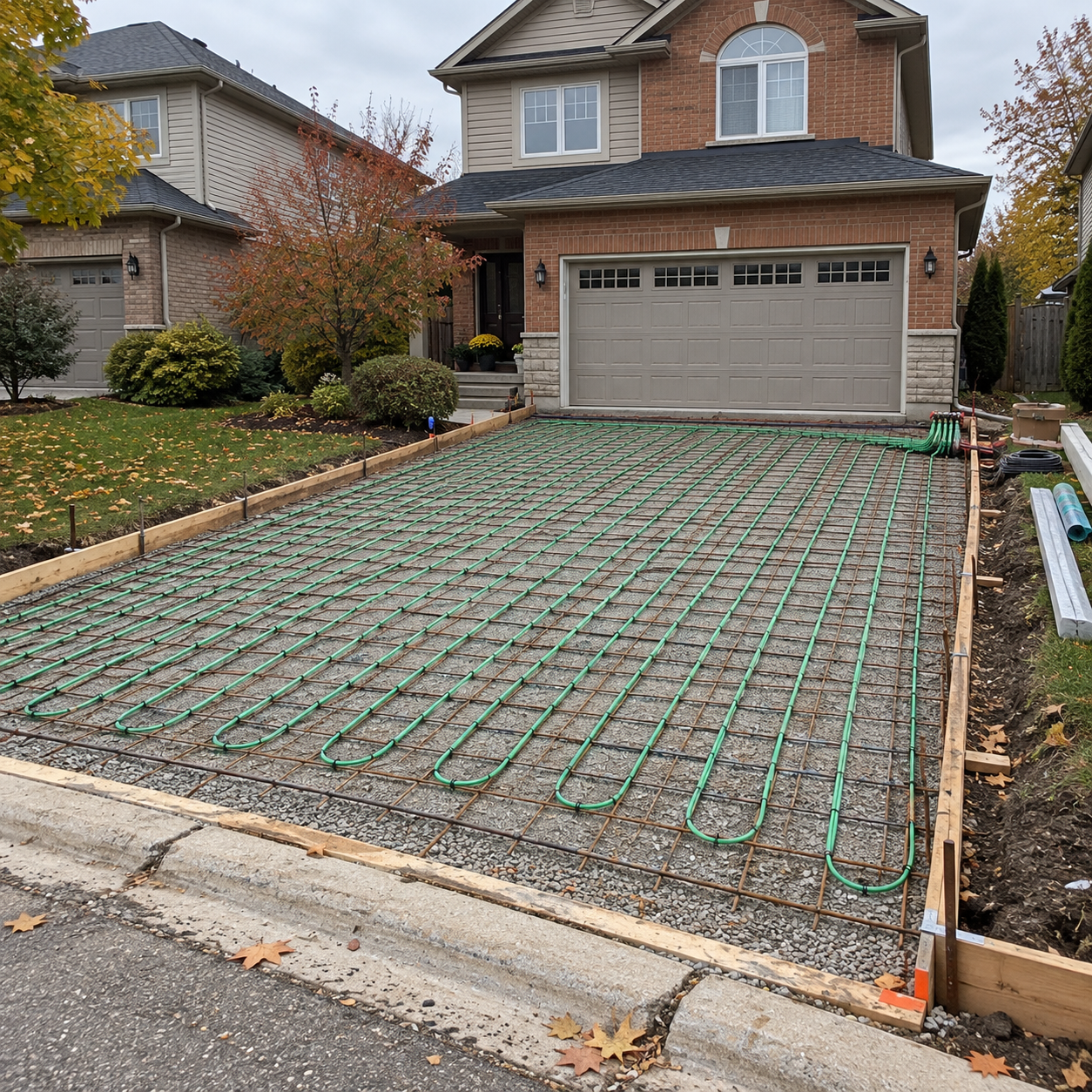
- Cables are tied to the reinforcing mesh and set roughly 5 to 7 cm below the finished surface.
- Each cable is tested before and after the pour, with readings recorded for the warranty.
- The system runs on dedicated circuits, so panel capacity gets checked at the site visit.
- If the panel needs an upgrade, that work should be booked right away.
Hydronic Systems Need More Lead Time
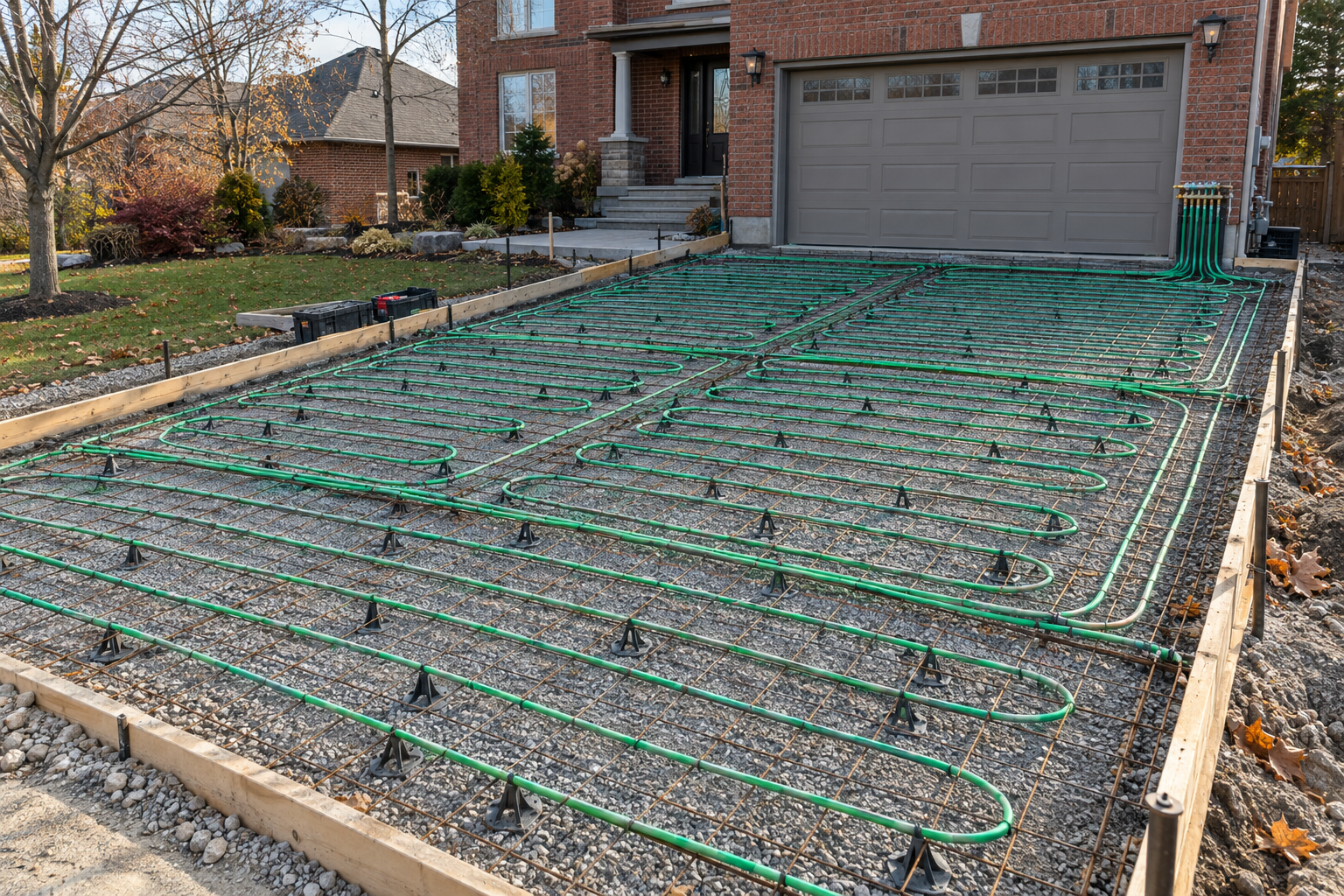
Hydronic heated driveway systems cost less to run over the long haul and suit larger driveways. They also involve more equipment, and each piece adds time to a fall schedule.
- The heat source has to be sized, and some homes need a dedicated boiler ordered.
- An existing boiler may work if it has enough spare capacity.
- Tubing is pressure tested before the pour to confirm every loop is leak-free.
- The manifold, pump, sensors, and controls are connected and tested after curing.
Can You Still Pour Concrete in a Cold Ontario Fall?
Yes, but the rules change. Canada's concrete standard, CSA A23.1, treats it as cold weather when the air may drop below 5°C within 24 hours of placing. The
cold weather concreting guidance from the Ready Mixed Concrete Association of Ontario summarizes what that standard requires on site.
What Cold-Weather Protection Involves
On a late-season job, the crew protects the slab as carefully as it pours it. Here is what that looks like in practice.
- Insulated blankets or heated enclosures keep the concrete at 10°C or warmer through curing.
- Snow and ice are cleared first, and concrete never goes onto a frozen base.
- The granular base may be pre-heated to prevent blisters and delamination during finishing.
- Non-chloride accelerators speed up setting without adding corrosive chloride near the steel mesh.
- The slab needs to reach 7 MPa before it can resist early frost damage.
Why the Heating System Cannot Cure the Slab
It is tempting to switch on the cables and let them keep fresh concrete warm. Manufacturers warn against it, because running the system beyond a brief test can speed curing unevenly and damage the slab. Protection comes from blankets and good planning, and the heat stays off until the concrete has cured.
What Waiting Too Long Costs You
Pushing the project into November does not make it impossible. It does make it harder and more expensive.
- Protection adds labour and materials to the job.
- Cold slows the set, so finishing times get harder to predict, especially for stamped or coloured concrete.
- Frost, rain, and early snow can cancel pour days with little warning.
- Crew schedules fill as more homeowners race the same deadline.
Permits and Inspections to Plan Around in London and the GTA
Paperwork is the part of a fall project that most often gets overlooked. Start it early, because none of these approvals can be rushed once the weather turns.
ESA Notification for Electrical Work
The electrical side of a heated driveway falls under the Ontario Electrical Safety Code. If you hire someone for that work, Ontario law says it must be a Licensed Electrical Contractor, and that contractor files the notification of work. You can
review the Electrical Safety Authority's notification and inspection requirements before your project starts.
- A building permit is not the same as an ESA notification, and some projects need both.
- Ask for the contractor's ECRA/ESA licence number before work begins.
TSSA Rules for Boiler and Gas Work
Most hydronic systems run off a gas boiler. In Ontario, that gas work must be done by a TSSA-registered contractor using certified gas technicians. Boiler lead times and this extra trade visit are two more reasons hydronic projects need an earlier start.
City Approvals for Wider Driveways
Widening a driveway or adding a curb cut in London means applying for a City street permit first. Under the City's front yard parking policy, a City curb is removed by City forces at the owner's expense once a curb cut permit is issued. GTA municipalities like Mississauga and Oakville run their own right-of-way permits, and approval times vary, so this paperwork should start before anything else.
How to Lock In a Pre-Winter Install
The homeowner side of this is short. Most of the work, and most of the risk, belongs with the contractor.
What You Can Do Right Now
A few quick steps on your end keep the project from stalling. None of them take more than an afternoon.
- Book a site visit in early October so design and permits can run while dates are still open.
- Decide whether you want the whole driveway heated or just the tire tracks and walkway.
- Find your property survey if the driveway may get wider.
- Note where your electrical panel or boiler is and roughly how old it is.
What Your Contractor Should Handle
At ESSES Concrete Group, the owner is on site for every heated driveway, so none of these steps get handed off and forgotten. If your old driveway is due for replacement anyway, a new
concrete driveway with heating built in gives you the cleanest possible install.
- Sizing the system, the heated zones, and the electrical load or heat source.
- A cold-weather pour plan covering blankets, mix choice, and backup dates.
- Coordinating ESA, TSSA, and any City permits.
- Testing every zone and walking you through the controls.
Want heat on your driveway before the worst of winter? Call
(226) 777-6325 or request a free estimate, and we will tell you honestly whether your project fits this season or belongs at the front of next spring's schedule. Every heated install carries our one-year workmanship warranty plus up to ten years of manufacturer coverage on the components.
Frequently Asked Questions
Can I Add Heating to My Existing Concrete Driveway Before Winter?
Usually not without replacing it. The cables or tubing need to sit inside the slab, so most retrofits mean removing the old driveway and pouring a new one. Overlay systems exist, but they generally do not perform as well as a full replacement.
Should I Salt a New Driveway During Its First Winter?
No. CSA guidance recommends that new exterior concrete air-dry for at least a month before any de-icing chemicals touch it. A heated driveway removes the need for salt entirely, which also protects the surface over the long term.
Does a Heated Driveway Run All Winter Long?
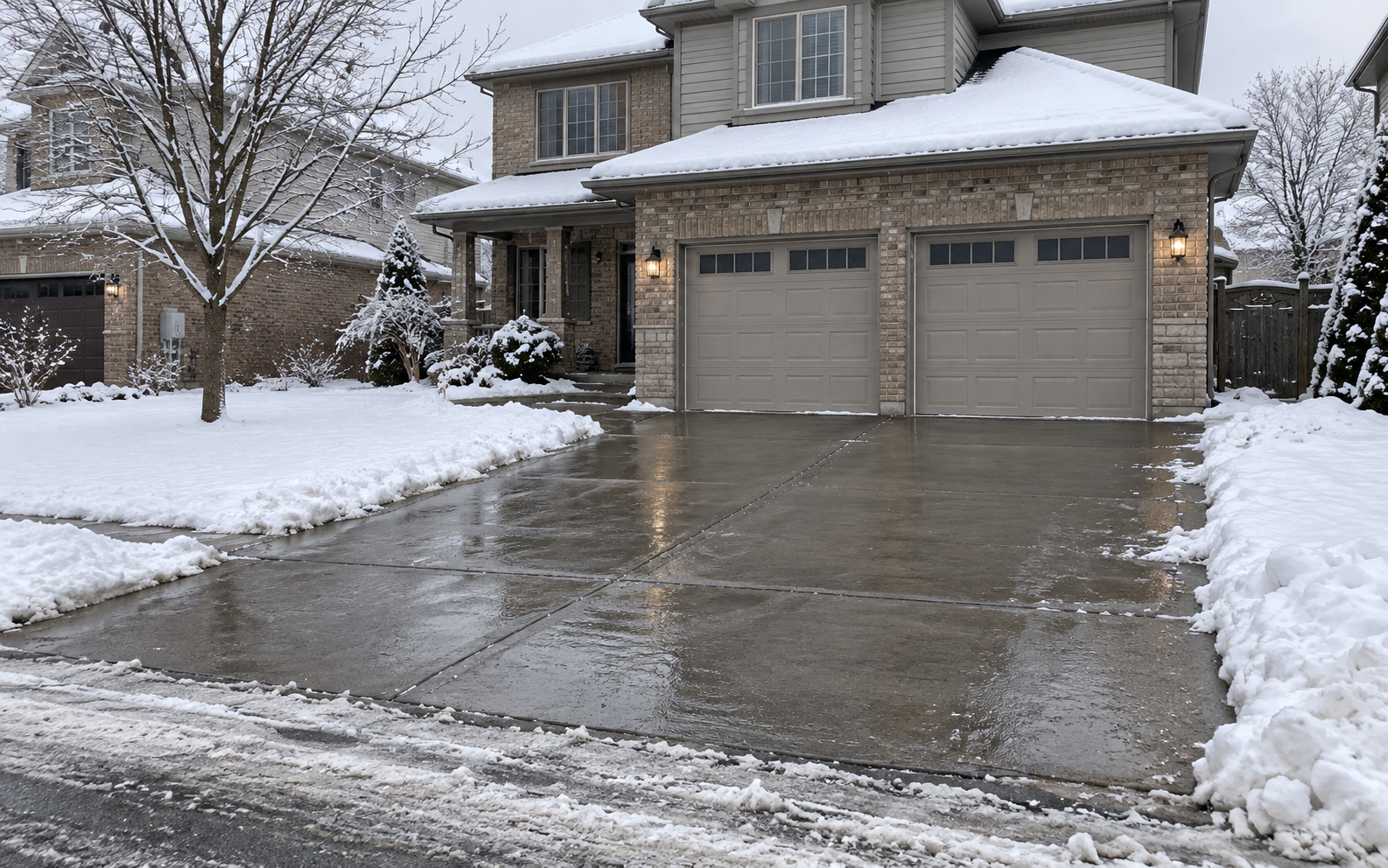
No. Sensors watch slab temperature and moisture, then turn the system on only when snow or ice starts to form. It shuts off once the surface is clear, so running costs follow actual storms rather than the calendar.
What Maintenance Does the System Need Before Each Winter?
Electric systems need a quick fall check of the sensors and controls, plus clearing debris away from the snow sensor. Hydronic systems add a look at fluid levels, pressure, and the circulation pump. Booking that check in October means any issue gets fixed before the first storm.